
Farms · Fairways · Forests
More drones.
More profits.
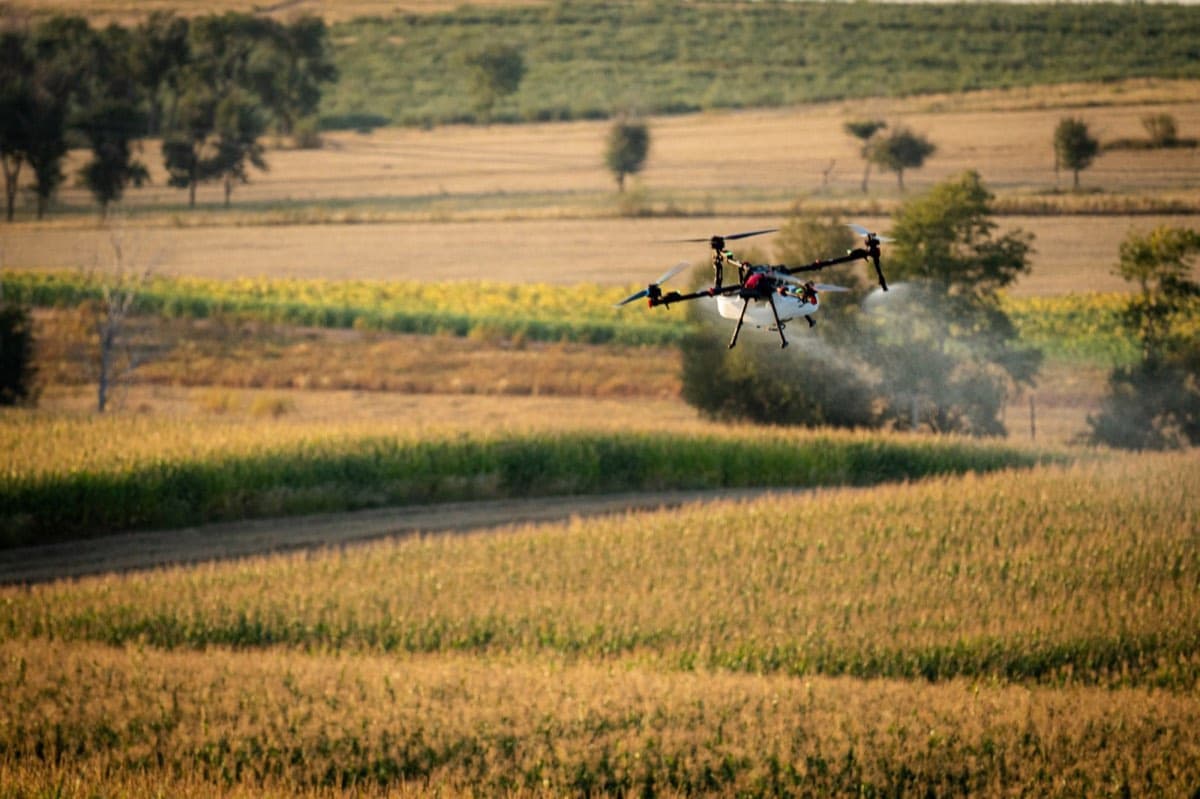
DroneFarmingUS reads your ground, prescribes the treatment, and flies it on the XAG P150 Max. Spraying, spreading, and seeding for farms, golf courses, and forests across Pennsylvania and the Mid-Atlantic. Book the job, or learn to fly it yourself.
Fig. 1 · XAG P150 Max, working pass
Ag Stack partners and standards


Your grandfather traded horses for horsepower. Your father picked up GPS. This is precision's next step.
Farming has always been about taking up the next good tool and staying who you are. This is that, nothing more. It is still your land, your calls, your crop. You are still the farmer.
Contents
Prescribe. Treat. Repeat.
Drone farming is not one machine doing one job. It is a loop: the field tells you what it needs, the aircraft delivers exactly that, and the next pass is smarter than the last. Three parts, in order.
Prescriptive
We find out what the ground actually needs.
Before anything gets sprayed, the field gets read. Multispectral and hyperspectral imaging on the crop and soil, thermal for moisture and ground anomalies, LiDAR for erosion and canopy structure, and visual modeling to catch what the eye would catch from a truck, everywhere at once.
- Multi- and hyper-spectral crop and soil analysis
- Thermal survey for moisture and ground anomalies
- LiDAR for soil condition, erosion, and crop health
- Visual field modeling and growth variation
- Ground sensors: moisture, pH, nutrients, weather
Precision
We treat only what needs treating.
The prescription becomes a flight plan. Variable-rate application puts product exactly where the map says, at the rate the map says, and nowhere else. Same aircraft sprays liquid or broadcasts granular, so one machine covers the whole season.
- Fertilizer to build soil nutrition
- Pesticide for insects, fungus, and pressure
- Fungicide to keep mold off the plant
- Herbicide to keep weeds off the crop
- Lime to bring pH back into range
- Seed and granular broadcast application
Proximity
Distance stops being the reason it did not get done.
The last gap in precision ag was always getting a machine and a person to the right acre at the right hour. Autonomous deployment closes it. The sensor trips the threshold, the system mixes and launches, and the pass happens in the window that actually mattered.
- WiFi irrigation valves driven by sensor thresholds
- Automated chemical mixing at an on-property station
- Autonomous aerial and ground deployment
- Continuous field data: water, nitrogen, pH, crop stress
Farms. Fairways. Forests.
Anywhere a ground rig struggles to reach, compacts what it rolls over, or simply cannot get there in the window that mattered.
Row crop, orchard, hemp
Corn, soy, orchards, specialty. Prescription maps by zone, variable-rate passes, and treatment in the tight weather windows a ground rig sits out.
Quoted in bands
Farms are not the only game in town
Anywhere vegetation has to be managed across ground a rig cannot easily cross, the aircraft works the same way.
What a quote is built from
Four inputs, priced separately so you can see what you are paying for. No bundled markup hiding inside a per-acre number.
Labor
Crew and flight time on your ground.
Chemicals
Quoted separately, at cost. Product is never bundled into the flight rate.
Travel stipend
Distance from Pittston to your gate.
Compliance
Licensing, insurance, and the state paperwork the job requires.
Chemicals are quoted at cost and are never bundled into the flight rate.
Tell us the ground. We'll quote it.
Ten questions, about two minutes. Enough for us to know whether we are the right tool for your situation, and to come back with a real number instead of a range.
What happens next
- 01
We read it
John reviews the request himself. Not a queue, not a bot.
- 02
We talk
A short call to pin down acreage, access, and timing.
- 03
You get a number
A written quote broken into labor, chemicals, travel, and compliance.
Rather just talk?
(570) 407-092649 S. Main St., Ste. 306, Pittston, PA 18640
Not ready for a quote? Call anyway and ask what the aircraft would actually do on your ground. No pitch.
It pays for itself in the field.
This is not a gadget. It is a tool that changes the math on every acre you treat. And if the math does not work for your acres, we will tell you that too.
Spray less, save more
Variable-rate application puts product only where the crop needs it, trimming chemical use by up to 30% and the cost that comes with it.
Cover the field fast
An 80 kg payload, 46 L/min flow, and 20-hectare field mapping mean one operator covers more acres in a day than a full ground crew.
Hit the weather window
Wet spring? Autonomous flight treats fields in the tight windows you would miss waiting on ground conditions for a rig.
No wheels on the crop
Nothing rolls across the field, so there is no compaction, no rutting, and no yield lost to the tracks a sprayer leaves behind.
Napkin math
interactiveDrag the sliders. See what your operation looks like from the air.
Back-of-napkin, on purpose. Assumes 8 m swath, 10 m/s working speed, 60% field efficiency, and 6flight-hours in a working day. Conservative against XAG published capability. Savings shown at the full "up to 30%" reduction; your fields will tell you the real number.
Two tracks. One honest comparison.
Rather run the aircraft yourself? Both tracks are 2.5-day, in-person intensives with certified XAG instructors, all equipment included. The difference is what you walk out licensed to do.
Technician
$799- 2.5-day in-person intensive
- XAG P150 Max operation certification
- Hands-on flight training on a real aircraft
- Safety protocols and regulations
- Field maintenance procedures
- Spray and application techniques
Team Leader
$2,165Everything in Technician, plus:
- FAA Part 137 authorization consultationthe decider
- Advanced flight planning
- Team management strategies
- Regulatory compliance training
- Business operations guidance
The shape of the 2.5 days
Real aircraft, real fields, small groups. Here is how the curriculum lays out.
Ground school
- Airspace and regulations
- Preflight and safety protocols
- Think-first decision-making
On the sticks
- Real-aircraft flight training
- Spray and spread techniques
- Variable-rate and prescription maps
Make it yours
- Field maintenance and care
- Part 137 pathway (Team Leader)
- Building a profitable operation
20 sessions throughout 2026 · In person in Northeastern Pennsylvania · Bring nothing, we provide the gear
The XAG P150 Max, by the numbers.
A state-of-the-art agricultural drone built for serious throughput: autonomous spraying, spreading, field mapping, and transport.
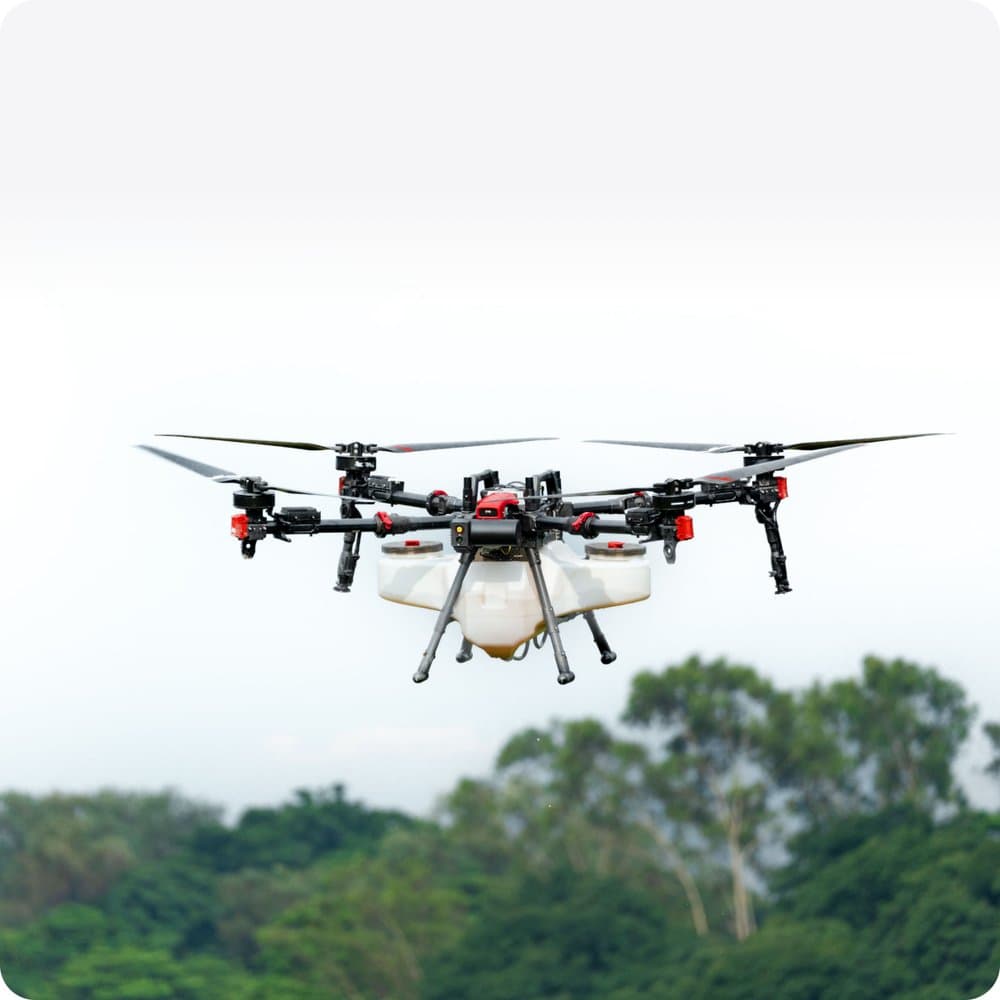
Fig. 2 · XAG P150 Max
Spraying
Spreading
Flight
Fig. 3 · The XAG P150 Max at work, courtesy of XAG
Obstacle avoidance
4D imaging radar from 1.5 to 100 meters.
Map-free 3D flight
No preloaded maps required to operate.
PPP-AR positioning
Centimeter-level precision navigation.
Variable-rate application
Prescription maps for precise dosing.
The paperwork behind the pass.
Putting a chemical on a field from an aircraft is a regulated act, federally and by the state. This is the full stack a legal aerial application sits on. It is the same list whether you hire the pass or run your own operation, and it is worth knowing before anyone flies over your ground.
FAA Part 107
FederalThe remote pilot certificate. Every operator on the aircraft holds one.
FAA Part 137
FederalAgricultural aircraft operations. This is the one that makes dispensing a chemical from an aircraft legal.
DEP Pesticide, Core
StatePennsylvania pesticide applicator certification, the general category.
DEP Pesticide, Aerial
StateThe aerial application category on top of Core.
Insurance
OperationalHull and gear, chemical drift liability, general liability, and workers' compensation.
Ask us which of these a given job needs and who is holding it. We will tell you straight, before we quote it.
A letter from Dr. John G. Duesler Jr.
To the farmer who's been wondering,
I've spent my career putting drones where they weren't supposed to fit: flying live broadcast coverage over the Masters, NASCAR, and the U.S. Open, and now working the fields of Northeastern Pennsylvania. Farming is the most consequential place this technology has ever landed.
We built DroneFarmingUS for the farmer who's curious but cautious. You don't need to be a pilot, and you don't need to love computers. You can hire the pass and never touch a controller, or you can learn to fly it yourself and keep the capability on your own place. Both are real doors, and either one starts with a conversation.
Come see it fly. Bring your skepticism; it's good soil.
John
Dr. John G. Duesler Jr. · Founder, DroneFarmingUS
P.S. The fastest way to get your questions answered is to just call: (570) 407-0926
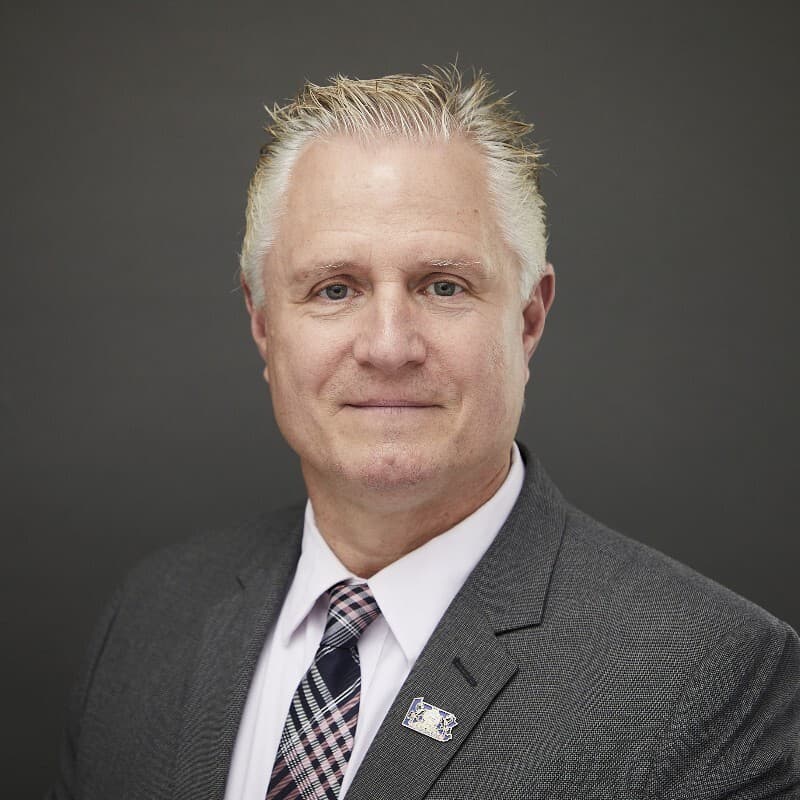
Fig. 4 · The operator
- Sports Emmy, George Wensel Award
- President, PA Drone Association
- Ph.D., Drexel University
- Goldman Sachs 10KSB Scholar
The honest answers.
Both, and they are separate things. DroneFarmingUS runs the aircraft as a custom applicator: you book a job, we fly it. The academy side trains you to run your own. Most people start with a job and decide later whether they want the machine themselves.
It depends on the acreage, the crop, how many passes the season needs, and how far we travel. Quotes are built from four inputs: labor, chemicals, travel, and compliance. Chemicals are quoted at cost and never bundled into the flight rate. Send the form and you will get a real number, not a range.
No. It is the next tool in a long line of them, the same way tractors and GPS guidance were in their day. The drone does the pass; you still decide what goes on the field, when, and why. Your land, your calls.
Yes. Night operations are scheduled separately from daytime work, and for some applications the still air after sundown is the better window. Tell us on the form which you want.
Aerial application sits on a stack of credentials: Part 107 for the pilot, Part 137 for dispensing from the aircraft, Pennsylvania DEP pesticide certification in the Core and Aerial categories, and drift and liability coverage. Ask us which ones your job needs and who is holding each one. We will answer straight before we quote, and we will not fly a job we are not cleared to fly.
Yes. We help you source, set up, and support the XAG P150 Max, and back it with the academy that trained you. Start with a conversation and we will walk you through what running one actually takes.
Not at all. We start from the ground up with live, in-person instruction in small groups. You bring the curiosity, we bring the guide.
In person in Northeastern Pennsylvania, out of 49 S. Main St., Ste. 306, Pittston, PA 18640, plus field time on real ground.
More drones. More profits.
Whether we fly your ground or teach you to fly it, it starts the same way: tell us what you are working with.
Talk to John directly.
The fastest way to get a real answer.